
What’s the Better Buy: Cell Phone Storage Pouches vs Storage Lockers

31 Jul 2026 5 min read
Amanda Bruns
Amanda Bruns
Member Engagement Manager, Learning Technology Center

Illinois’ new school cell phone ban (SB 2427) comes with a significant direct cost to schools: provisioning “secure and accessible storage” for applicable devices during instructional time.

Starting with the 2027-28 school year, Illinois K-12 districts will face a strategic decision when choosing a storage solution: whether to opt for a lower initial capital expenditure or a solution with lower long-term operational costs.

Defining specific needs and goals for device storage is crucial to proactive policy development, which will inform budgetary decisions in turn. Districts should plan to incorporate these costs into future budget cycles now, starting with a purpose-driven cost-benefit of several popular options.

Comparing Popular Secure Storage Options for Cell Phones

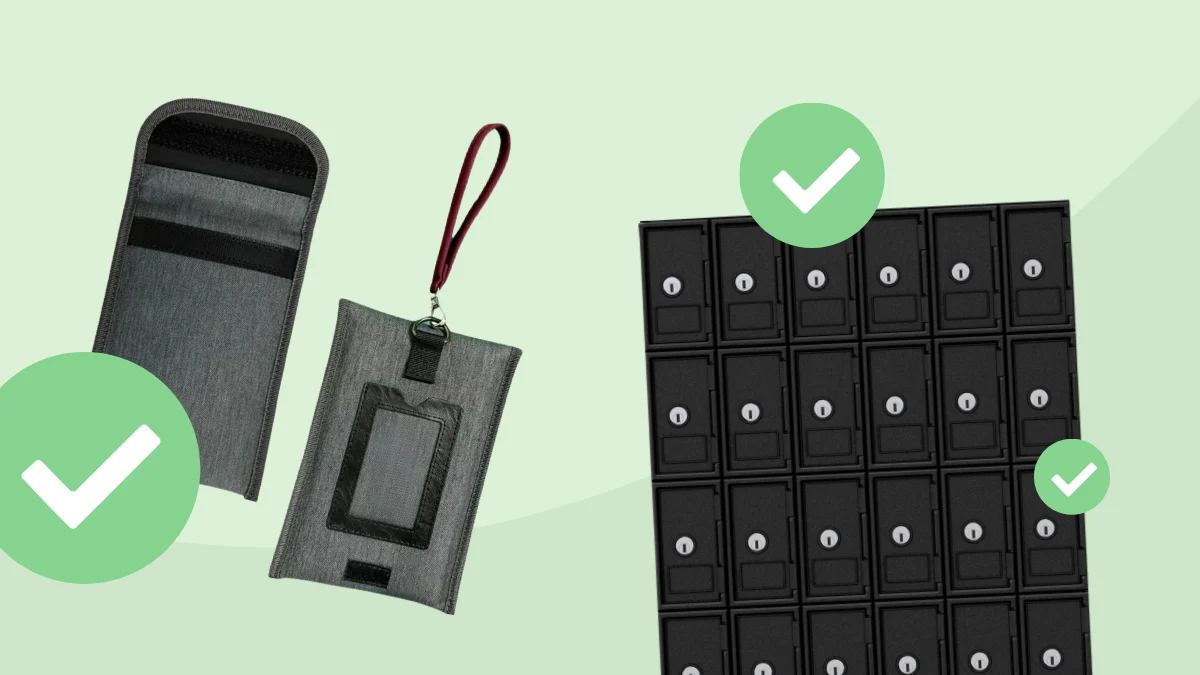
Among schools in other states that have already implemented school cell phone bans, two options remain popular: secure pouches and secure lockers.

There’s no one one-size-fits-all solution here. District leaders should factor in initial capital, recurring replacement costs, scalability, practicality, and administrative overhead when picking the option that best suits their school community.

FeatureSecure PouchesSecure Lockers (32-port)
Initial Capital CostApproximately $30,000 for 1,000 studentsApproximately $5,000 – $15,000 for 15 units
Est. Annual Replacement Rate15-20% of total pouchesMinimal repairs
Annual Replacement Cost$4,500 – $5,000Minimal (replacement parts)
Security & TamperingVulnerable to magnets and forceReinforced exterior, lock are difficult to penetrate
Administrative BurdenHigh (daily management, tracking lost items)Low (self-service model)
Additional FunctionalityN/APotential for charging

Secure Pouches

Costs and benefits
Upfront Cost

Pouches that secure cell phones are often considered a low-cost entry point option, typically costing between $20 to $30 per student. This often makes initial implementation and scaling more affordable for districts with limited resources or a large student body.

Practicality

When it comes to practical use in the field, schools report a mixed bag of results with secure pouches. Some of the most popular options utilize a magnet to seal each pouch shut at the beginning of the school day. While this does provide extra security, it can add an administrative bottleneck when students need their pouches unlocked (such as at the end of a school day).

By comparison, other models use a simple snap or Velcro, which are easier to manage without specialized equipment or extra staff management.

Long-Term Cost

Schools report a high replacement rate for secure pouches, often needing to replace 15-20% annually due to wear and inventory loss. This also adds some administrative burden, requiring staff time for tracking lost porches, collecting replacement fees, and managing daily logistics of distribution and unlocking.

While some secure pouches are known for this drawback, certain vendors are addressing these issues.

For example, NutKase highlights that their pouches are designed with a durable, rugged exterior and industrial stitching to improve longevity. The use of a simple Velcro closure eliminates the need for complex magnetic unlocking stations, reducing administrative overhead and providing a simpler, more transparent solution for students and staff alike.

Secure Lockers

Costs and benefits
Upfront Cost

The capital cost for permanent, multi-bay lockers is higher upfront. An average 32-slot classroom holder costs around $150 to $180 per locker bank. Larger, standalone lockers can cost over $500, plus the cost of installation and the need for permanent placement within the school building.

Practicality

When placed in a school, cell phone lockers operate on a self-service model. That is, students typically place their own device in the locker, then return for it at the end of instruction time (much like a personal locker).

Some storage lockers also include charging functionality, offering extra incentive for students to lock up their device during the school day.

Long-Term Cost

While the initial cost for storage lockers is greater, these systems offer a lower long-term cost of ownership. They are durable and more difficult to tamper with due to their reinforced structure and physical lock. They also require minimal maintenance and administrative intervention once installed, making less of a burden on a school over the long-term.

Remember: this decision is not just about picking the lowest price tag, either upfront or over the long-term. Purchases like this should be made strategically, mindful of how each option may be received by your school community, on day one and a few years down the road.

District should also explore potential funding sources, such as Title IV funds, which can be used to improve school conditions for student learning and support the effective use of technology.

Purchasing Device Storage Options

For Illinois school districts looking into secure storage solutions, the LTC Purchasing Program can be a valuable resource.

Through this free program, your district can unlock competitive pricing and streamlined, compliant procurement for school equipment of all kinds – device storage options included.

These are just a few options currently offered by our Vendor Partners:

*Must be logged in as an LTC Purchasing Program member to access the Marketplace listings.

Universal fit for most popular phone sizes, providing a durable and drop-proof solution for student phone management

Keep your phone secure, safe, and quiet by instantly disconnecting it from all communication signals.

Designed with a secure Velcro closure, it effectively shields your phone from tracking, hacking, and unwanted communication by blocking cellular, Wi-Fi, Bluetooth, GPS, and RFID signals.

Designed with educators in mind, this rugged steel cabinet offers 32 foam-lined, numbered slots that keep student phones protected, organized, and easily trackable.

45-device AC mobile charging cart for laptops, Chromebooks, and tablets.

22-gauge steel cabinet with thick polycarbonate doors, can be floor-mounted or installed in a wall.

32-slot classroom cell phone holder securely stores phones during activities, is made of durable aluminum alloy, features a lock and key for safety, and can be wall-mounted or easily carried between classrooms.

Find it on Marketplace

Locking in discounts on your chosen device storage solution is simple when you shop through the Marketplace.

Just login with your MyLTC account, search the Marketplace, and checkout in just a couple clicks. Your discounts will be automatically  applied at checkout, saving you time and effort on this important purchase.

Plan on purchasing in volume or have specific requirements? You can always utilize our free Quote Request System to solicit competitive bids from multiple vendors, ensuring you get the best value and comply with your district’s procurement policies.

Amanda Bruns
Amanda Bruns
Member Engagement Manager, Learning Technology Center

Amanda leads LTC Purchasing Program's member engagement by driving membership growth and support through strategic programs and statewide outreach, ensuring schools across Illinois realize substantial financial benefits.